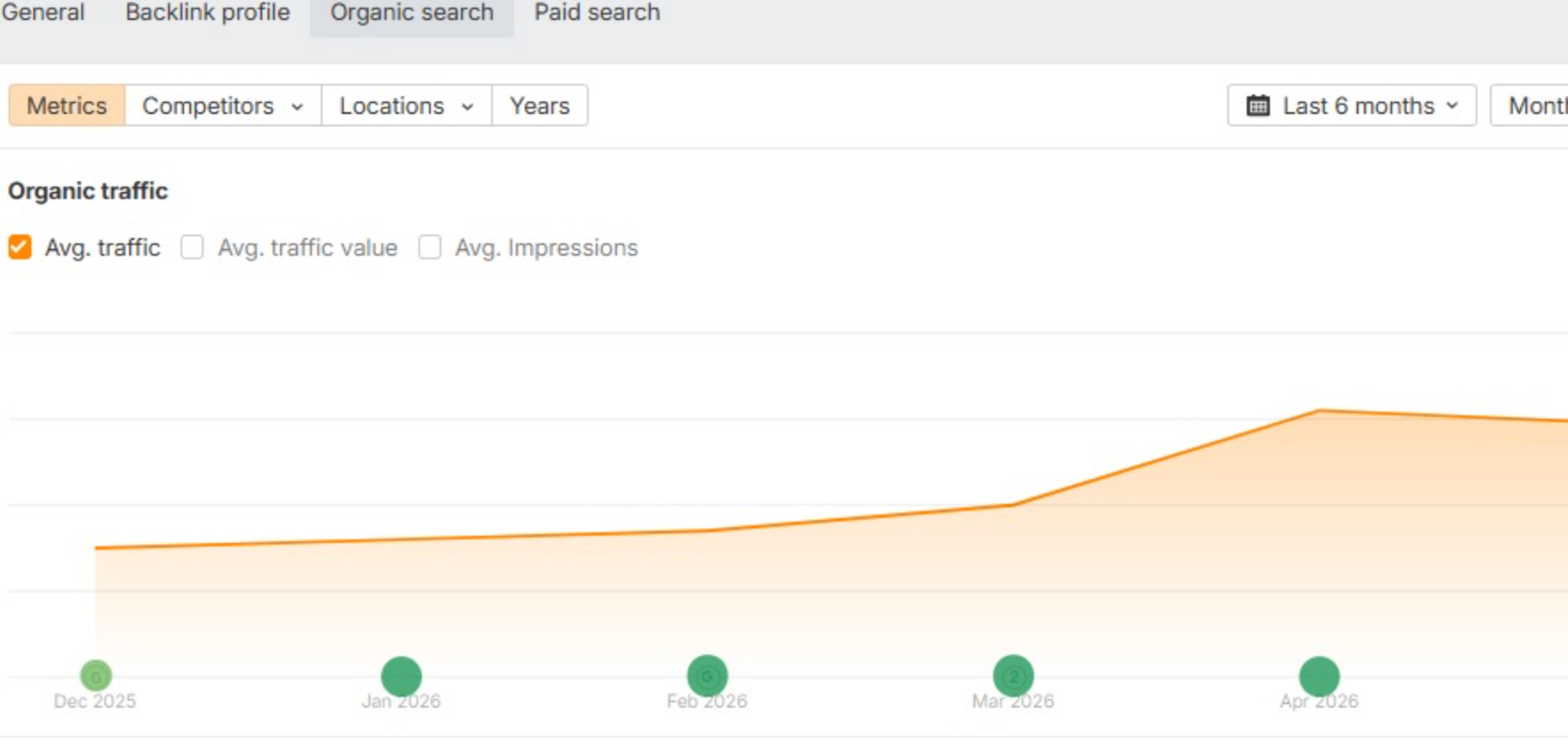
What changed and why it mattered
The campaign combined service-type pages, city relevance, stronger expert signals and technical improvements so local and service intent could reinforce each other rather than compete.
1. Search intent and architecture
Commercial pages were separated from informational support topics so each URL had a clear job. Internal links then connected those pages in a way that concentrated relevance around the highest-value services.
2. Technical foundations
Crawl and indexation issues were reviewed alongside redirects, canonicals, sitemaps, page speed and template behaviour. Technical work was prioritised where it directly affected discovery, duplication or user experience.
3. Evidence and expertise
Content was improved with clearer expert context, useful detail and stronger proof rather than relying on generic keyword expansion. This is especially important in high-trust sectors where shallow pages struggle to compete sustainably.
4. Measurement
Performance was evaluated through ranking distribution, organic traffic and Search Console trends. The purpose of the campaign was compounding qualified visibility, not a temporary spike from one page.